
Overview
Wherever innovations and personalized products are desired: With almost unlimited freedom of design, additive manufacturing technologies open up new perspectives to achieve constructive solutions. These types of manufacturing techniques barely set any limits to the spirit of innovation. Additive manufacturing techniques follow the trend towards individual customized products and will allow for serial production in the future.
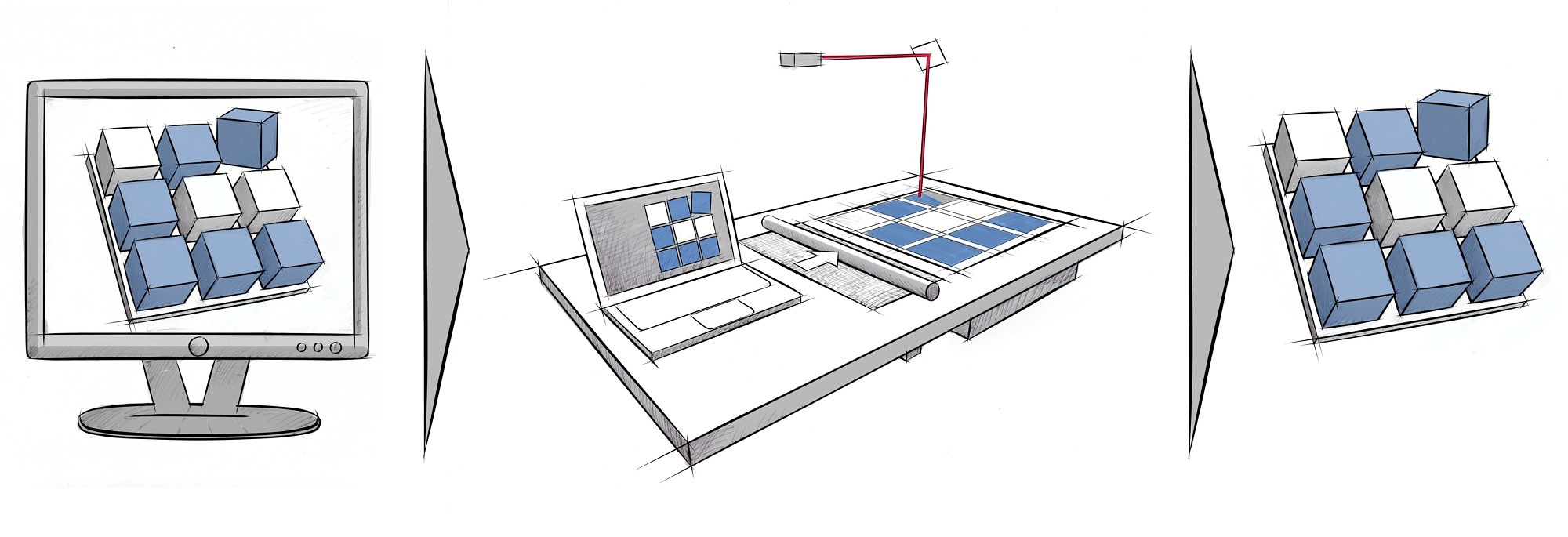
To take advantage of the potentials included in additive manufacturing techniques the new Collaborative Research Centre 814 does fundamental research on this technology, so it can be used for the production of multifunctional components. The most important thing is to analyse the process chain from beginning to end. This not only includes design and process simulation, but also especially characteristics, creation and modification of suitable materials and their reactions in the fabrication process, up to the final component.
First, there is the fundamental analysis of existing powder and beam-based additive manufacturing processes. A multidisciplinary team of researchers explores which holistic strategies concerning material and process have to be developed and implemented to achieve optimum results, i.e. to gain a broad basis of fundamental inter-relations in regard to optimized component properties. This includes:
- Preprocessing (component design and simulation, raw material properties)
- Processing (generation of geometry)
- Postprocessing (component testing)
- Quality assurance
Project structure
The CRC 814 creates the scientific basics for the production of geometrically complex and highly functionalized multi-material parts, as well as for computer-aided component design and component testing. It is divided into four major-areas:
- Project-area A: Powder- / Materials
- Project-area B: Processes
- Project-area C: Components
- Project-area T: Transfer
To achieve the challenging targets of the CRC 814 – “Additive Manufacturing” Collaborative Research Centre, the 17 sub-projects closely work together on all levels – including the working groups “powder technology”, “measurement methods”, “modeling” and “multi-material” which were especially established for this purpose.
Key insights
The CRC has produced a number of important scientific insights, several of which have had a lasting impact on the field of powder-based additive manufacturing.
- Influence of Particle Properties: It has been demonstrated that particle size, particle shape, and electrostatic forces are key factors influencing the quality and stability of powder bed deposition.
- Advanced simulation models for powder deposition: Simulation models have been further developed to now include layers that have already fused, in order to clarify the correlation between deposition rate and the integrity of the powder bed.
- Structural Optimization Using Lattice Structures: Models were refined to specifically integrate lattice structures into solid-body components, thereby optimizing buckling stability and reducing micro-buckling effects through graded structures.
- Prediction of Thermomechanical Properties in Metals: Significant progress has been made in predicting thermomechanical properties and reducing computation times in the simulation of laser beam melting of metals, particularly with regard to residual stresses and distortion.
- Refined Crystallization Models for Polymers: Advances in crystallization modeling now make it possible, for the first time, to conduct a detailed analysis of temperature and crystallization trends during the process.
- Microstructure-Based Property Prediction: Temperature fields derived from process simulations form the basis for microstructure modeling and enable the prediction of grain growth as well as elastic and elastoplastic component behavior using micromechanical models.
- Feedback Control for Defect Prevention: An integrated system combining monitoring and simulation makes it possible to identify deviations from the ideal process on a shift-by-shift basis and to adjust the process strategy in real time to prevent defects from forming.
- Holistic Quality Assurance: The combination of predictive simulation and in-situ process monitoring provides a new framework for the reliable, defect-free production of complex geometries with predefined, uniform properties.